


Note: Please, Click and Check side menu for more categorywise details and Technical specification for each categories.
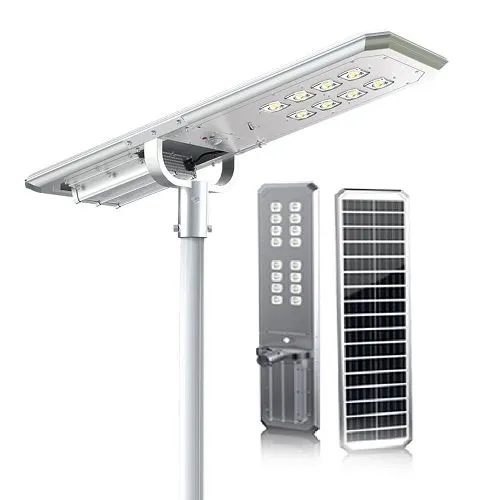
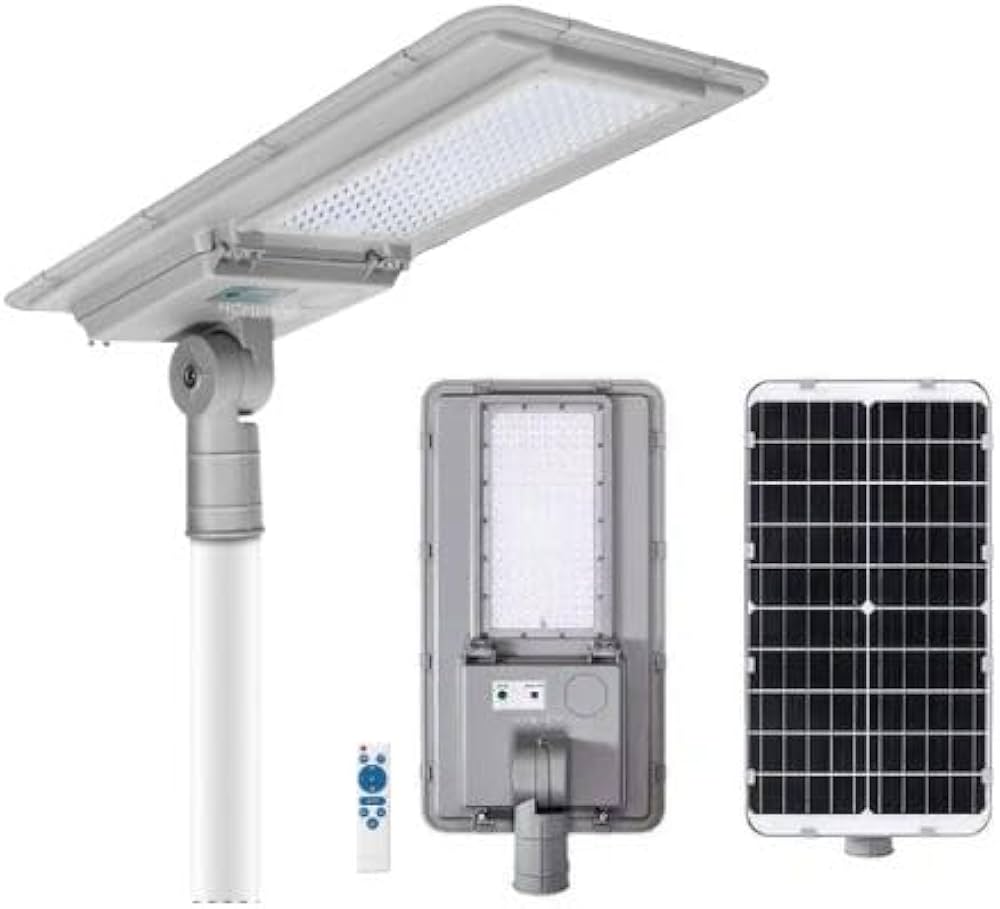
LED SOLAR STREET LIGHTs (DC)
Solar street lights are raised light sources which are powered by photovoltaic panels generally mounted on the lighting structure or integrated in the pole itself. The photovoltaic panels charge a rechargeable battery, which powers a fluorescent or LED lamp during the night.
Most solar panels turn on and turn off automatically by sensing outdoor light using a light source.Solar streetlights are designed to work throughout the night. Many can stay lit for more than one night if the sun is not available for a couple of days. Older models included lamps that were not fluorescent or LED. Solar lights installed in windy regions are generally equipped with flat panels to better cope with the winds.
Latest designs use wireless technology control for battery management. The street lights using this technology can operate as a network with each light having the capability of performing on or off the network.
Components of Solar powered street lights
Solar street lights consist of 5 main parts:
1. Solar Panel
The solar panel is one of the most important parts of solar street lights, as the solar panel will convert solar energy into electricity. There are 2 types of solar panel: mono-crystalline and poly-crystalline. Conversion rate of mono-crystalline solar panel is much higher than poly-crystalline.
2. Lighting Fixture
LED is usually used as lighting source of modern solar street light, as the LED will provide much higher Lumens with lower energy consumption. The energy consumption of LED fixture is at least 50% lower than HPS fixture which is widely used as lighting source in Traditional street lights. LEDs lack of warm up time also allows for use of motion detectors for additional efficiency gains.
3. Rechargeable Battery
Battery will store the electricity from solar panel during the day and provide energy to the fixture during night. The life cycle of the battery is very important to the lifetime of the light and the capacity of the battery will affect the backup days of the lights. There are usually 2 types of batteries: Gel Cell Deep Cycle Battery and Lead Acid Battery and many more.
4. Controller
Controller is also very important for solar street light. A controller will usually decide to switch on /off charging and lighting. Some modern controllers are programmable so that user can decide the appropriate chance of charging, lighting and dimming.
5. Pole
Strong Poles are necessary to all street lights, especially to solar street lights as there are often components mounted on the top of the pole: fixtures, panels and sometimes batteries. However, in some newer designs, the PV panels and all electronics are integrated in the pole itself. Wind resistance is also a factor.
Types
Each street light can have its own photo voltaic panel, independent of other street lights. Alternately, a number of panels can be installed as a central power source on a separate location and supply power to a number of street lights.
Advantages
- Solar street lights are independent of the utility grid. Hence, the operation costs are minimized.
- Solar street lights require much less maintenance compared to conventional street lights.
- Since external wires are eliminated, risk of accidents is minimized.
- This is a non polluting source of electricity.
- Separate parts of solar system can be easily carried to the remote areas
Disadvantages
- Initial investment is higher compared to conventional street lights.
- Snow or dust, combined with moisture can accumulate on horizontal PV-panels and reduce or even stop energy production.
- Rechargeable batteries will need to be replaced several times over the lifetime of the fixtures adding to the total lifetime cost of the light.
Different Types of Solar Street Light
There are several different types of solar street lights designed to meet various lighting needs and environmental conditions. Here are some of the common types:
Split Solar Street Lights
All-in-Two Solar Street Lights
All-in-One Solar Street Lights
1. Split Solar Street Lights
Split solar street lights, also known as separate solar street lights, are a type of solar street lighting system in which the key components are separated and installed in different locations for optimal efficiency and flexibility.
Advantages:
Optimal Solar Panel Placement: One of the primary advantages of split solar street lights is the ability to place the solar panel in the most sunlight-exposed location. This optimizes energy generation and allows for maximum solar panel efficiency.
Customization: These systems often have modular designs, allowing for customization based on project requirements. You can choose the size and capacity of the solar panel and battery to match the desired lighting output and backup capacity.
Ease of Maintenance: The modular design simplifies maintenance and servicing. If a component needs to be repaired or replaced, it can be done without disrupting the entire system. This reduces downtime and maintenance costs.
Scalability: Split solar street lights are scalable. If you need to increase the lighting coverage in an area, you can easily add more lights and components as required.
Energy Efficiency: Split solar street lights typically include charge controllers to optimize the charging and discharging of the battery. This ensures that the system operates at peak efficiency, maximizing energy savings.
Reliability: These systems are designed for reliable and autonomous operation. They continue to provide lighting even in off-grid or remote locations, enhancing safety and security.
Remote Monitoring: Many split solar street lights can be equipped with remote monitoring capabilities. This allows for real-time monitoring of the system’s performance and the ability to detect and address issues promptly.
Environmental Benefits: Like all solar-powered systems, split solar street lights are environmentally friendly because they generate electricity from renewable solar energy, reducing greenhouse gas emissions and dependence on non-renewable energy sources.
Cost-Effective: While the initial installation cost may be higher than traditional grid-powered lights, the long-term operational and maintenance costs are generally lower. The energy savings and reduced maintenance contribute to cost-effectiveness over time.
Off-Grid Capability: Split solar street lights can operate independently of the main power grid, making them suitable for areas with unreliable or no electricity supply. This is especially valuable in rural and remote locations.
Enhanced Lighting Control: Many systems incorporate lighting control features, such as timers and sensors, to adjust brightness levels based on ambient light conditions and motion detection, improving energy efficiency.
Disadvantages:
Lead-acid batteries find extensive application in these lights; however, they come with larger dimensions, diminished energy density, and a shorter operational lifespan. Consequently, they necessitate frequent upkeep.
The installation procedure may demand additional time and complexity, resulting in increased labor and material expenses. The wiring configuration of split solar street lights is also more intricate.
Furthermore, the battery, whether suspended or buried, carries a heightened electrical hazard risk and is susceptible to theft.
Significant portions of your project’s operational budget are allocated to ongoing maintenance expenses over the long term.
In addition, the aesthetics are less than pleasing, making them unsuitable for urban projects.
2. All-in-Two Solar Street Lights
All-in-Two Solar Street Lights” refer to a type of solar street lighting system that consists of three main components: solar panel, lithium battery, LED source. These systems are designed to provide efficient and reliable outdoor lighting while optimizing the placement of the solar panel for maximum energy capture.
Advantages:
Demonstrating enhanced capacity to sustain street lighting, courtesy of the elevated energy density achieved by lithium-ion or LiFePO4 batteries when solar power generation is unavailable.
The rechargeable solar battery exhibits superior efficiency, an extended lifespan, and reduced maintenance demands.
Moreover, the battery exhibits remarkable resilience against removal and damage, even in the face of flooding and excessive moisture, in stark contrast to the vulnerability of hung or buried counterparts in split street light systems.
Its aesthetics also surpass the conventional split street light design, making it a more visually appealing choice.
Disadvantages:
Inferior-grade lithium-ion batteries are susceptible to thermal runaways, a potentially hazardous scenario that can result in fires or harm to electronic components and the lighting module.
Typically, they come at a higher price point compared to split solar-powered street lights.
3. All-in-One Solar Street Lights
All-in-One Solar Street Lights are a type of solar-powered outdoor lighting system that integrates all the major components into a single, compact unit. These components typically include the solar panel, LED lamp, battery, charge controller, and sometimes a motion sensor. All-in-One Solar Street Lights are designed to provide energy-efficient and environmentally friendly lighting solutions for streets, pathways, parking lots, and other outdoor areas.
Advantages:
Simplified Installation: These lights are designed for easy and straightforward installation since all components, including the solar panel, LED lamp, battery, and charge controller, are integrated into a single unit. This simplifies the installation process, reduces labor costs, and minimizes the need for extensive wiring.
Energy Efficiency: All-in-One Solar Street Lights use LED lamps, which are highly energy-efficient. LED technology produces bright illumination while consuming significantly less energy than traditional lighting sources, resulting in lower energy bills and reduced environmental impact.
Environmentally Friendly: They rely on clean and renewable solar energy, reducing the carbon footprint associated with outdoor lighting. By harnessing sunlight, these lights produce no greenhouse gas emissions and help combat climate change.
Cost Savings: Although the upfront cost of All-in-One Solar Street Lights may be higher compared to conventional grid-powered lights, the long-term cost savings are substantial. These systems eliminate electricity bills, require minimal maintenance, and have a longer lifespan, leading to cost-effective operation over time.
Autonomous Operation: All-in-One Solar Street Lights operate independently of the main power grid. They store energy during the day and use it to power the LED lamps at night, ensuring reliable lighting even in areas with unreliable or no access to electricity.
Low Maintenance: LED lamps have a long lifespan, typically lasting up to 50,000 hours or more, reducing the frequency of lamp replacements. Additionally, high-quality batteries used in these systems are designed for durability and require minimal maintenance.
Customizable Options: These lights come in various wattages and configurations to suit different lighting requirements. They can be tailored to provide the desired brightness and coverage for specific applications, from residential streets to large parking lots.
Motion Sensor Capability: Many All-in-One Solar Street Lights are equipped with motion sensors, allowing them to detect movement nearby. When motion is detected, the lights automatically brighten, improving security and conserving energy during periods of inactivity.
Grid Independence: These lights are suitable for remote and off-grid locations where connecting to the main power grid may be expensive or impractical. They offer a reliable and self-sufficient lighting solution in such areas.
Quick ROI: With reduced energy costs, minimal maintenance expenses, and long lifespans, All-in-One Solar Street Lights often provide a rapid return on investment (ROI), making them financially attractive for both public and private projects.
Reliable Lighting: They provide consistent and high-quality illumination, enhancing safety and visibility on streets, pathways, parking lots, and other outdoor spaces.
Reduced Light Pollution: All-in-One Solar Street Lights can be designed with features that minimize light spill and glare, helping reduce light pollution and its negative effects on the environment and wildlife.


