


Fire Alarm and Detection System
A fire alarm and detection system are a system to activate alarms in individual rooms or buildings when an emergency occurs. Fire alarm and detection systems are commonly found in schools, corporate office buildings, and other types of commercial establishments. When activated, the alarms warn the occupants of the building of an emergency and provide instructions on how to evacuate the building.
Fire alarm and detection system should be regularly inspected and maintained by a professional, to ensure its continued function and safety.
Two Types of Fire Control Systems:
1.Conventional Fire Alarm Control Systems
2.Addressable Fire Alarm Control Systems
What is an ‘Addressable’ Fire Alarm System?
An addressable fire alarm system uses sophisticated technology to pinpoint a fire’s exact location. Every device is connected and communicates continuously with each other and a central monitoring station. They use digital signals to transfer vital information such as system health, device type, location, smoke density, etc.
Hospitals, schools, industrial facilities, and larger establishments need a customizable and scalable fire alarm to better protect their people, property, and premises. The basic capabilities of conventional fire alarms will not provide the degree of protection needed to ensure safety in large, complex buildings.
This is where an addressable fire alarm system comes into play.
The only option for larger buildings, these intelligent systems offer numerous safety-enhancing benefits and can pinpoint the exact location of a fire. Let’s explore what an addressable fire alarm system is and the five key benefits of using one.
How Does an Addressable Fire Alarm Work?
An addressable fire alarm is a commercial fire alarm system that uses sophisticated technology to detect and pinpoint a fire’s exact location. Every device in an addressable system is connected and communicates continuously with each other and a central monitoring station. They use digital signals to transfer vital information such as:
- System health
- Device type
- Device location
- Smoke density
- Heat intensity
- Water pressure changes
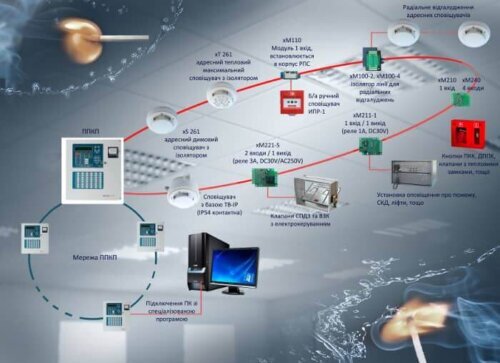
Addressable fire alarm systems are designed using a loop configuration. These loop circuits called signaling line circuits (SLC), can support numerous initiating devices and notification appliances. Over 200 devices can be attached to a single loop with complex systems utilizing multiple SLC loops. Addressable systems typically include:
- Strobe lights
- Fire sprinklers
- Evacuation speakers
- Manual pull-down stations
- Heat, smoke, and duct detectors
- Pressure and flow control switches
Each component in an addressable fire alarm loop has its own electronic address or serial number assigned to it so that malfunctions can be identified quickly and precisely. When an attached device activates, the unique code displays on the main control panel – helping to determine which type of device it is and where in the facility it is located. Since the control panel continually communicates with attached devices, technicians can identify system faults quickly and resolve issues more efficiently.
Benefits of An Addressable Fire Alarm System
While more expensive, addressable fire alarm systems offer several advantages over their conventional counterpart – particularly in larger buildings or complexes. If you’re considering investing in an addressable system, here’s a closer look at the benefits.
- Faster response times– The detailed information provided by an addressable fire alarm panel enables quicker response times – as responders can arrive prepared with the exact cause and location of a detected fire.
- Improved reliability– Addressable systems are less susceptible to false alarms from malfunctioning detectors and other issues that could cause unnecessary disruption.
- Scalability– Compared to conventional systems, addressable systems require less cabling and can monitor more devices in a single loop — making it ideal for larger commercial buildings.
- Greater flexibility– Addressable systems are highly customizable and can be programmed to perform specific functions such as closing fire doors, activating sprinklers, and shutting off HVAC systemsto prevent circulating smoke. They allow you to adjust settings and create custom thresholds that better suit your particular environment.
- Simplified Maintenance– Since an addressable system can pinpoint individual detectors that need servicing or repairs, authorized technicians can complete maintenance tasks more efficiently – lowering labor costs over time.
Ready to Install an Addressable Fire Alarm System?
An addressable fire alarm provides many advantages, making it a desirable option for larger commercial and industrial facilities. With its reliable detection capabilities, simplified maintenance needs, and increased safety features, it’s easy to see why investing in an addressable system is worth the price tag.
Businesses should partner with an experienced fire protection company for addressable fire alarm system design, installation, maintenance, and monitoring. Trained technicians will work with you to create a plan to migrate your outdated fire alarms to newer, addressable systems often recommended by the local AHJ.


Difference between ‘Addressable’ and ‘Conventional’ Fire Alarm Panels
All fire alarm systems have a control panel that communicates with the field devices (smoke detectors, pull stations, etc.) that alert the building occupants of a fire and signal the sprinkler system to activate. The fire alarm panel acts as the “brains” of the system and can activate a building’s sprinkler system if a fire is detected. However, how the detection devices communicate with the control panel varies by system type.
Conventional fire alarm systems vs. addressable fire alarm systems
Two types of fire alarm systems commonly found in commercial buildings are addressable systems and conventional systems. The main difference in these two systems is how the field devices communicate with the fire alarm panel.
Conventional systems were the first fire alarm system that came to the market. Addressable systems are newer and more advanced.
Wiring
Conventional systems have zones on them, which are basically just circuits. Conversely, the fire alarm panels of addressable systems actually communicate over a communication circuit with each individual field device.
In other words, with addressable systems there is one wire that connects all devices to the fire alarm control panel whereas with conventional systems there is a different wire for each device and each wire connects to the fire alarm control panel.
As a result, addressable systems require less cabling than conventional systems since each detector has its own unique address.
Location detection
With conventional fire alarm panels, there will be multiple devices on a zone, so if any of the devices on that zone go into alarm, you’ll get an alarm at the panel that will say “Zone Alarm.” It will also tell you what zone, as they’re numbered. This means that if an alarm comes in, it will tell you the area of the building that the alarm is in, but not a specific location since it could be any of the devices on that circuit. You would then have to walk around in that area looking at the devices to try and determine which one caused the alarm.
Addressable systems allow you to set an address on the field device, normally a 3-digit number, and then tell the panel what and where that device is located. If you get an alarm, you will see something like: “Alarm Smoke Detector (Address: 023) 1st Floor Hall at Room 102.” These systems will provide a specific location where the alarm and what type of device caused the alarm. This is a big help in response times for the fire department or the customer. It also gives you the ability to individually program each device so if you have one smoke detector and one duct detector right next to each other, you can program one to send an alarm and the other to just send a supervisory and not set of the horns and strobes. On a conventional panel, every device on the same circuit would report the same.
The fire alarm control panel on an addressable system receives information and status reports from each device and indicates its exact location if there is smoke or fire.
Cost
Conventional fire alarm systems cost less to purchase but actually cost more to install due to the extensive wiring involved with these systems. It takes more time and more wires to install conventional systems.
Addressable fire alarm systems are more advanced from a functionality standpoint but cost less to install. Addressable systems can also be more cost-efficient in the long run when you consider the accuracy of these systems at detecting fires and therefore preventing fire damage. These systems are also less likely to signal false alarms, a costly mistake.
Functionality
Looking at pure functionality, addressable fire alarm panels are simply more advanced and therefore allow for more control and flexibility. These types of systems are even known as “intelligent” fire alarm systems. They are also more reliable than conventional fire alarm panels when it comes to false alarms.
This isn’t to say that conventional fire alarm systems are not effective; just in some ways limited when it comes to the scope of protection they can offer.
What type of fire alarm system is right for my building?
Conventional systems are still used for very small applications or for customers who don’t want to upgrade, but they have serious limitations as to their abilities to protect larger buildings. Addressable systems are generally “safer” systems as they have to ability to decipher and communicate more detailed information to the control panel, and therefore increase speed and accuracy of fire extinguishment. First responders need as much as information as possible when responding to a fire alarm. Addressable fire alarm systems provide the exact location of a fire in a building, which can save lives, time, and money.
Choosing a fire protection company
When looking for a company to install or inspect your fire alarm system, knowledge and experience are everything, but the customer experience should matter too. We can install, repair, and maintain your building’s fire alarm system. We even offer fire alarm monitoring. By choosing one company to handle all aspects of your fire alarm system, you’re getting an extra layer of protection and convenience that many other fire protection or security companies simply cannot offer.
Fire Systems offers 24-hour emergency service and 24/7 monitoring for your fire alarm system. We also provide training in the proper use and maintenance of your system so everyone will be prepared to respond appropriately in an emergency situation. When you call Fire Systems, Inc., we put you in contact with an individual specifically trained to address your fire protection needs.
Fire Alarm and detection – Addressable Systems
Brand : Simplex – 4100ES Fire Alarm Control Units
(Addressable fire alarm control unit for large facilities and campuses)

Fire Alarm Control Panel
Specification:
- Usage/Application: Fire Alarm System
- Frequency: 50- 60 Hz
- Material: Mild Steel
- Phase: 1- Phase
Riding on unfathomable volumes of industrial expertise, we are engaged in offering a broad assortment of 4100ES FAS Repeater Control Panel.
Fire Alarm Control Panel
The Fire Alarm Control Panel offered by NCB is a comprehensive fire protection solution. With advanced features and a user-friendly design, this control panel provides reliable and effective fire detection and alarm system. It can be programmed to meet the specific needs of your building and its layout. The control panel also offers a range of communication options, including notification to first responders and building occupants, making it an essential component of any fire protection system.

Network Annunciator:
Main Features:
LED indicators for Fire, Supervisory Alarm, Pre- Alarm, Fire Output Active, Power On, On Test, Panel Sounder Silenced, Delay Active, More Events Point Bypassed, General Trouble, Power Trouble,

Manual Pull Station
Main Features:
- Metal Construction
- Enclosed switch with glass rod (included)
- 10 Amps @ 120 VAC
- Available in single action & dual action
The manual pull station is a crucial component of any fire protection system, providing a quick and easy way to trigger the alarm in the event of a fire. At NCB, we offer a range of manual pull stations designed to meet the specific needs of our customers. Our manual pull stations are easy to use, highly visible, and designed to withstand the harsh conditions often encountered in fire protection systems.
The manual pull station is an essential component of any fire protection system, providing a simple way for building occupants to alert the fire department in the event of a fire. Our manual pull stations are designed to meet the latest safety standards and are made from high-quality materials to ensure reliability and durability.
In the event of a fire, time is of the essence, and the manual pull station provides a fast and reliable way to trigger the fire alarm and alert the fire department. NCB provides high-quality fire protection products that meet the needs of our customers and provide peace of mind in the event of a fire.
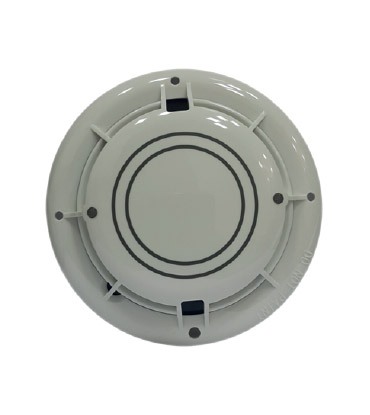
Multi- Criteria Detector
Main Features:
- Simple and reliable device addressing method
- Uses the noise immune Digital Communication Protocol (DCP), which utilizes interrupts for fast response to fires
- Removable smoke labyrinth for cleaning or replacement
- Compatible with the analog sensors

Photo electric Smoke Sensor
Main Features:
- Simple and reliable device addressing
- Automatic compensation for sensor contamination
- Uses the noise-immune digital communication protocol (DCP), which utilizes interrupts for fast response to fires
- Programmable non- polling LEDs
- Removable smoke labyrinth for cleaning or replacement
NCB offers photoelectric smoke sensors for fire protection systems. Our smoke sensors use advanced technology to detect smoke and trigger an alarm, alerting occupants of a potential fire. Our photoelectric smoke sensors are highly sensitive, accurately detecting smoke even in its earliest stages. They are also easy to install and maintain, making them an ideal solution for homes and businesses alike. Trust NCB to provide you with a reliable smoke detection system that will give you peace of mind in the event of a fire.

Heat Detector
Main Features:
- Simple and reliable device addressing method
- Uses the noise immune Digital Communication Protocol (DCP), which utilizes interrupts for fast response to fires
- Adjustable threshold temperature 135°F – 150°F (determined by panel)
Heat Detector
Heat Detector is a critical component in ensuring fire safety in any building. This device detects temperature changes in the environment and triggers an alarm, alerting occupants of a potential fire hazard. The heat detector is suitable for installation in kitchens, garages, attics, and other high-risk areas where fire is a common concern. This heat detector features a sensitive thermal element that responds quickly to temperature changes, providing early warning in the event of a fire. The device is easy to install, with a simple wiring process that can be completed by a professional. The compact design and sleek appearance make it a discreet addition to any home or business. In the event of a fire, the NCB Heat Detector can help prevent catastrophic damage by providing early warning. This essential fire protection tool is an investment in the safety of your property and loved ones. With its reliability and ease of use, the NCB Heat Detector is a must-have for any fire safety plan. |

Dual Relay Output Module:
Main Features:
- Contacts are rated as follow:
- LE-DCP-R2ML: 2A @ 30 VDC/ 0.5A @ 120 VAC
- LE-DCP-R2ML: 8A @ 30 VDC/ 4.8A @ 250 VAC
- Programming is highly flexible providing 16 priority states plus zoning capability
- Operates on class A or class B SLC loop

Class A Supervised Output Module:
Main Features:
- Flexible application
- Quick response to emergency conditions
- Operation parameters are maintained by the module, and individual communication with the control system during emergency conditions is not required
- Contacts are rated 2.0 Amps @ 24VDC
- Programming is highly flexible providing 16 priority states plus zoning capability

Dual Input Monitor Module
Main Features:
- Dual input contact monitor
- Can be programmed to monitor Normally Open (NO) or Normally Closed (NC) contacts
- Operates on Class A or Class B SLC loop
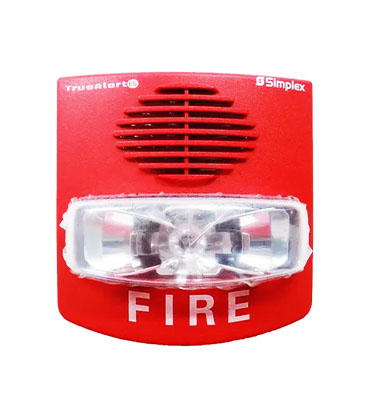
Sounder with Flasher
Main Features:
- Usage/Application: Fire Alarm System
- Material: ABS
- Color: Red
- Voltage: 15-28 VDC
- Weight: 238 gm
True Alert ES addressable A/Vs are individually addressed audible/ visible notification appliances that receive power, supervision, and control signals from a fire alarm control panel providing IDNAC Signaling Line Circuits (SLCs).
The Sounder with Flasher is a vital component of the fire alarm system. It alerts building occupants of a potential fire through loud sound and flashing lights. The sounder and flasher can be easily installed and integrated with the Fire Alarm Control Panel, ensuring a seamless and effective fire protection system. With its durable design and high-quality components, the Sounder with Flasher is an important investment in fire safety for any building.

Conventional Fire Alarm Bell
Main Features:
- Vibrating Type
- High Sound Level
- High Reliability
- Low Power Consumption
- Available in 6”, 8” and 10” Housing
Brands:
SIMPLEX (USA), China (PRC)
Conventional Fire Alarm Control System
1 Zone Fire Alarm Control Panel AW-CFP2166-1
2 Zone Fire Alarm Control Panel AW-CFP2166-2
4 Zone Fire Alarm Control Panel AW-CFP2166-4-8
8 Zone Fire alarm control Panel
12-32 Zone Fire Alarm Control Panel AW-CFP2166-12-32
1 Zone Fire Alarm Control Panel AW-CFP2166-1
The AW-CFP2166 series 1 Zone conventional fire alarm panel is the heart of the conventional fire alarm system, which can realize centralized control, can supply power to the detectors.
The AW-CFP2166 1 Zone series conventional fire alarm panel is designed based on EN54 part 2&4 standard.
Product Features:
- The AW-CFP2166 1 Zone fire alarm panel has the following characteristics:
- Analogue conventional detector inputs: 20 detectors or MCPs maximum.
- Smaller size and easier for installation, but all-around.
- Maximum number of bells per CIE: 4 Bells.
- 2 relay-outputs: FIRE/FAULT.
- High-capacity batteries: 12V2.3Ah*2, over 8h for stand-by use.
- Automatic power switchover: mains power and stand-by power.
- Succinct functional buttons: friendly user interface for easy operation and recognition.
- Fault supervision and notification: inputs, sounder, mains/batteries.
- Evacuation: man-made fire alarm condition on panel.
- Silence: sounders and panel buzzer.
- Extensible application for GSM: inform user anytime by mobile telephone.
Technical Parameters
| | +10% |
|
| -15% |
DC OUTPUT | 24VDC typical | |
Voltage for MCU | 5V | |
Current @ 220VAC | standby current ≤250mA | |
Maximum current | 1A | |
Batteries current | 750mA maximum, current limited | |
Batteries | 2*12V/ 2.3Ah sealed lead acid gel, self-regulated | |
Battery low-voltage protection | 22.2V | |
| Detectots / zone lines: 21V-26V Sounder1 and sounder2 lines:21-26.2V | |
Max points (detector and MCP) per CIE | 20 detectors and 10 MCPs | |
Zone alarm current | 6mA minimum/ 27mA maximum | |
Sounder output | 2*0.3A maximum | |
Relay contacts rating | Dry contacts (NO/NC) 1A @24VDC | |
EOL resistor for zone and outputs | 6.8K 1W | |
Fuse on EMI board | 2A/ 250V Ceramic slow blow fuse 5*20(mm) | |
| Class A temperature range: -5 to 50°C | |
Terminal blocks rating | All terminals rated for 12 to18 AWG (0.75 to 2.5 mm2) | |
Service life | 10 years | |
2 Zone Fire Alarm Control Panel AW-CFP2166-2
- The AW-CFP2166 series 2 Zone conventional fire alarm panel is designed based on EN54 part 2&4 standard. And it is the central part of conventional fire alarm system, designed for applications requiring smoke detector, bell, manual pull stations, and sprinkler supervision. Each zone can be disabled by a button. The basic unit offers 1 to 8 zones of initiation, up to 16 zones for larger applications.
Product Features:
- 2 Zone Fire Alarm Control Panel Features
1.Maximum number of Analogue Conventional Detector Inputs: 20 detectors each zone
2.Available Options: 2-4 Zone and 6-8 Zone
3.outputs for Alarm devices: Includes 2 bells/fire relay/ fault relay
4.Auxiliary resettable power output: 24VDC/ 100mA limiting protection
5.Automatic power switchover: mains power and secondary power (from batteries)
6.Independent functional buttons with indication: User friendly interface for easy operation and recognition
7.Access levels to enter the panel
8.Fault supervision and notification: inputs, outputs, system, power, earth, fuse
9.Disablement: zones disablement 10.Evacuation: Fire drills to simulate fire alarm condition on panel
11.Silence: sounders and buzzer silence 12.Walk test: indicators check
Technical Parameters
AC INPUT | | +10% |
|
| -15% |
DC OUTPUT | 24VDC typical | |
Voltage for MCU | 5V for MCU | |
Current at 24VDC from PSE | 450mA standby current | |
Maximum current from PSE | 1A except batteries charge | |
Batteries current | 1.85A maximum, current limited | |
| 24VDC +/- 10%, 100 mA max, | |
| 2*12V/ 2.3Ah sealed lead acid gel, | |
Battery low-voltage protection | 21V | |
Detectors connection allowed each zone | 20 (except MCPs) | |
Zone alarm current | 6mA minimum/ 27mA maximum | |
Sounder output | 2*0.75A maximum | |
Fire Relay | 1A/30VDC maximum | |
Fault Relay | 1A/30VDC maximum | |
Communication protocol | 2 wires RS485 bus system | |
EOL resistor for zone | 6.8K 1W | |
EOL resistor for outputs | 6.8K 1W | |
Fuse for AC Power | 1 A/ 250V glass tube fuse 5 X 20mm | |
Fuse on DC Power | 1A/ 250V glass tube fuse 5 X 20mm | |
| Class A temperature range: -5 to 50°C | |
| All terminals rated for 12 to18 AWG | |
4 Zone Fire Alarm Control Panel AW-CFP2166-4-8
The AW-CFP2166 series conventional fire alarm panel is designed based on EN54 part 2&4 standard.
4 Zone Fire Alarm Control Panel Specification
- It is modularized design, the panel can expend from 1 zone to 32 zones easily.
- It has 2 level control mode by a lock
- It has 24VDC and 5VDC power supply output.
- It has FIRE and FAULT signal output.
- It has 2 general sounders output.
- Each zone has 1 circuit detectors input
- Each zone can be disable by a button.
- It has RESET button to reset the panel.
- It has SILENCE button to stop BUZZER and SOUNDERS.
- It has EVACUATE button to start a manual fire alarm immediately.
- It has battery low protection function, when battery voltage lower than 21VDC
battery will be cut off automatically until the mains power is on.
- It has an optional GSM module for fire alarm by SMS
Technical Parameters
| | +10% |
|
| -15% |
DC OUTPUT | 24VDC typical | |
Voltage for MCU | 5V for power board MCU, 3.3V for others | |
Current at 24VDC from PSE | 450mA standby current | |
Maximum current from PSE | 2A except batteries charge | |
Batteries current | 1.85A maximum, current limited | |
| 24VDC +/- 10%, 100 mA max, | |
| 2*12V/ 2.3Ah sealed lead acid gel, | |
| 2*12V/ 7Ah if needed | |
Battery replace Resistance | 2Ω±10% if needed | |
Battery low-voltage protection | 22.2V | |
Detectors connection allowed each zone | 20 (except MCPs) | |
Zone alarm current | 6mA minimum/ 27mA maximum | |
Sounder output | 2*0.75A maximum | |
Fire protection | 100mA maximum | |
Fire routing | 100mA maximum | |
Fault routing | 100mA maximum | |
Communication protocol | 2 wires RS485 bus system | |
Relay contacts rating | Dry contacts (NO/NC) 1A @24VDC | |
EOL resistor for zone | 6.8K 1W | |
EOL resistor for outputs | 6.8K 1W | |
Fuse on power board | 3A/ 250V glass tube fuse 20mm | |
Fuse on EMI board | 1A/ 250V glass tube fuse 20mm | |
| Class A temperature range: -5 to 50°C | |
| All terminals rated for 12 to18 AWG | |
8 Zone Fire alarm control Panel
The AW-CFP2166 series 8 Zone conventional fire alarm panel is designed based on EN54 part 2&4 standard.
Specification
1.It is modularized design, the panel can expend from 1 zone to 32 zones easily.
2.It has 2 level control mode by a lock
3.It has 24VDC and 5VDC power supply output.
4.It has FIRE and FAULT signal output.
5.It has 2 general sounders output.
6.Each zone has 1 circuit detectors input .
7.Each zone can be disable by a button.
8.It has RESET button to reset the panel.
9.It has SILENCE button to stop BUZZER and SOUNDERS.
10.It has EVACUATE button to start a manual fire alarm immediately.
11.It has battery low protection function, when battery voltage lower than 21VDC, battery will be cut off automatically until the mains power is on.
12.It has an optional GSM module for fire alarm by SMS .
Technical Parameters
ITEM | 8 Zone Fire alarm control Panel |
Model No. | AW-CFP2166-04-16 |
Mains supply voltage | 110VAC or 240VAC |
Internal power supply | 27.2VDC |
Total output current limited | 3A @ 240VAC |
Batteries (Default Configuration) | 12V2AH*2-24VDC in Total |
End of Line device | 6.8k Q,5% tolerance, 0.25W (color code-blue, grey, red, gold) |
End of line resistor value | 6.8k 22,5% tolerance, 0.25W (color code-blue, grey, red, gold) |
Dimensions(mm) | 395*502″124mm |
Weight (without batteries) | 7kg |
Weight (with batteries) | 9.6kg |
Environmental | Class A temperature range: -5 to 50°C |
12-32 Zone Fire Alarm Control Panel AW-CFP2166-12-32
The AW-CFP2166 series conventional fire alarm panel is designed based on EN54 part 2&4 standard. And it is the central part of conventional fire alarm system, designed for applications requiring smoke…
12-32 Zone Fire Alarm Control Panel Specification
- It is modularized design, the panel can expend from 1 zone to 32 zones easily
- It has 2 level control mode by a lock
- It has 24VDC and 5VDC power supply output.
- It has FIRE and FAULT signal output.
- It has 2 general sounders output.
- Each zone has 1 circuit detectors input.
- Each zone can be disable by a button.
- It has RESET button to reset the panel.
- It has SILENCE button to stop BUZZER and SOUNDERS.
- It has EVACUATE button to start a manual fire alarm immediately
- It has battery low protection function, when battery voltage lower than 21VDC,battery will be cut off automatically until the mains power is on
- 1It has an optional GSM module for fire alarm by SMS
Technical Parameters
TEM | 4-32 Zone panel |
Model No. | AW-CFP2166-04-32 |
Mains supply voltage | 110VAC or 240VAC |
Internal power supply | 27.2VDC |
Total output current limited | 3A@240VAC |
Batteries (Default Configuration) | 12V2AH*2-24VDC in Total |
End of Line device | 6.8k Q2,5% tolerance, 0.25W (color code-blue, grey, red, gold) |
End of line resistor value | 6.8k Q2,5% tolerance, 0.25W (color code-blue, grey, red, gold) |
Dimensions(mm) | 362*565*124mm |
Weight (without batteries | 8kg |
Weight (with batteries) | 12.5kg |
Environmental | Class A temperature range: -5 to 50°C |
Fire Alarm System GSM Module AW-GSM200
When a fire alarm or fault occurs in the fire alarm system, the GSM module will send fire alarm information to the designated person’s mobile phone via SMS. This GSM Module can connect to conventional fire alarm system, fire suppression system etc. And can also receive 3 external volt free signals .
Conventional Manual Call Point AW-D135C
The AW-D135C Conventional manual call point is designed to be use with an intelligent two-wire control system. If it is pressed after a fire is manually confirmed, an alarm signal may be sent to a fire alarm control system which will, after receiving the alarm signal, display the equipment status of the manual fire call points. When the manual fire call points is operating normally, the red indicator will blink; when there is a fire alarm, it will remain lit.
This passage will introduce the features, installation, wiring and use of AW-D135C conventional manual call point, to help you understand more about the conventional manual call point.
The size of the base is 87mm×7mm×33mm (L×W×H), the mounting hole diameter is φ5mm, and the fixed hole spacing is 36mm.
This conventional manual call point complies with the EN54-11 standard. With excellent reliability and high stability, this manual call point is safe and easy to use.
Model | AW-D135C |
Main Voltage | Zone 24V or 12V |
Operating current | monitoring status≤20uA, alarm status≤15mA |
Application | For indoor use only |
Wiring | The promise of two bus system(Zone +, Zone -) |
Indicator | Red alarm indicator flashes when it is under normal condition, |
Protection class | IP30 |
Environmental | Class A temperature range: -5 to 40°C (23~104°F) |
Materials and colors | ABS, red |
Mating Panel | AW-CFP2166 fire alarm control panel |
Size | 99mm* 92mm* 66mm(with cover) |
Weight | about 95g |